The Bug Finder Became The Patch Factory
Daybreak is the moment AI security stops bragging about finding holes and starts bargaining with the people who have to close them.
At 2:37 PM I had the OpenAI Daybreak post open in one tab and the Trail of Bits writeup open in another, and the browser felt like a factory floor with too many alarms.
The OpenAI page had the polish: Daybreak, Codex Security, GPT-5.5-Cyber, trusted defenders, partner programs, critical infrastructure, the whole institutional drumline. The Trail of Bits page had the shop noise: 64 pull requests, 51 issues, 37 merged patches, 19 open-source projects, a week of engineers pointing frontier models at real code while maintainers tried to keep the machine from eating their afternoon.
That second tab was the story.
OpenAI announced the Daybreak expansion on June 22, 2026. The pitch is simple and slightly queasy: AI has made vulnerability discovery faster, so the bottleneck has moved. Finding bugs is no longer the expensive part. Validating them, ranking them, patching them, testing them, disclosing them, and landing the fix without drowning maintainers in synthetic paperwork is the new hard part.
This is one of those sentences that sounds obvious after somebody says it and annoying before they do.
For years, the cybersecurity industry has treated vulnerability discovery like the magic trick. Find the bug. File the report. Drop the CVE. Publish the writeup. Get the logo. Go home with the conference hoodie and a slightly inflated sense of moral purpose.
Now the machines are getting good at the magic trick.
Which means the magic trick becomes a supply-chain problem.
The Report Flood Arrived Early
OpenAI says Codex Security has scanned more than 30 million commits across more than 30,000 codebases since its research preview in March. It says human reviewers have marked more than 70,000 findings fixed, while more than 500,000 findings were automatically determined to be fixed.
Those numbers are too large to feel like craft.
They feel like weather.
The announcement says the updated Codex Security plugin can scan code, build or use threat models, validate findings, trace attack paths, generate patches, and export into existing vulnerability management systems. The company is also rolling out the full limited-release GPT-5.5-Cyber to trusted defenders, with stronger benchmark numbers than GPT-5.5 on CyberGym, ExploitGym, and SEC-bench Pro.
There is a lot to distrust here, because there is always a lot to distrust when a model lab announces that its new model can help save the world from the problem that model labs are also making weirder.
The benchmark numbers matter, but they are not the pulse. The pulse is access.
GPT-5.5-Cyber is described as more capable and more permissive for authorized cyber work, released to verified defenders with monitoring, scoped controls, and review. The Daybreak partner program routes the capability through security companies. Patch the Planet routes it through expert researchers, maintainers, and coordinated disclosure.
This is the new bargain: the model gets sharper, so the door gets narrower.
That might be the right move. It might also create a club where the best defensive tools travel through approved vendors, approved researchers, approved programs, approved governments, and everyone else waits outside with a backlog, a stale dependency tree, and three issues filed by somebody’s bug bot at 1:12 AM.
Both things can be true, because apparently we are doing grown-up governance now, which means every useful answer arrives covered in fingerprints.
Maintainers Are The Blast Radius
Patch the Planet is the part with teeth.
OpenAI says the initiative was founded with Trail of Bits, with HackerOne and Calif involved, to help widely used open-source projects move from findings to fixes. More than 30 projects have committed to participate. Initial names include cURL, NATS Server, pyca/cryptography, Sigstore, aiohttp, Go, freenginx, Python, and python.org.
That list should make any working engineer sit up straighter.
These are not demo repos with cheerful SQL injections sitting in controllers named VulnerableController. They are networking, cryptography, supply chain, language infrastructure, package infrastructure, the floorboards under everyone else’s product.
Trail of Bits says the first week covered 19 projects and produced hundreds of discovered bugs, 64 pull requests, and 51 issues, with many more still under coordinated disclosure. Thirty-seven patches were already merged. Some of the work was straightforward fixing. Some was durability work: fuzzing harnesses, historical-CVE variant pipelines, differential testing, threat models, CI scanning, supply-chain tooling, correctness patches, release workflow hardening.
That is the good version of AI security.
The bad version is a thousand automated reports landing on a volunteer maintainer’s desk, each one written in the confident tone of a machine that has never had to nurse a release branch through a dependency conflict while a stranger insists the bug is critical because the word “panic” appeared somewhere in the stack trace.
Security findings are not free.
Every report spends somebody’s time. Somebody has to reproduce it. Somebody has to decide whether the issue is real. Somebody has to understand reachability, severity, exploitability, compatibility, disclosure timing, downstream impact, test coverage, and whether the patch makes the project better or simply rearranges the problem into a prettier crater.
AI makes reports cheaper.
Maintainer attention remains expensive.
That is the collision.
Patches Are Political Objects
A patch looks technical until it tries to land.
Then it becomes social.
Maintainers have taste. They have history. They know why a weird branch exists, why an old API cannot be cleaned up yet, why a test is brittle, why a “simple” fix breaks three downstream users who depend on behavior nobody should have depended on but absolutely did. The codebase has memory. Usually the memory is stored in scars.
This is why Patch the Planet is more interesting than another AI bug scanner. The design puts Trail of Bits engineers between model output and maintainers. They deduplicate, triage, validate, reproduce, adjust severity, write or refine patches, and use the project’s own disclosure process.
That human layer is not decoration.
It is the firewall between useful automation and open-source harassment at scale.
The uncomfortable part is that this creates a new institutional role in open source. The model lab funds the work. The elite security firm operates the work. The maintainers receive the work. The public benefits from the work. The power does not disappear just because the output is helpful.
Who chooses which projects get covered first?
Who decides what counts as critical infrastructure?
Who gets free access to the model, the tooling, the expert review, the API credits, the ChatGPT Pro accounts, the extra hands?
Who gets another hundred bot-shaped bug reports and a LinkedIn post about democratized defense?
Open source already has a class problem. Some projects sit under foundations and corporate patrons. Others are one exhausted person, two old laptops, and a package download count large enough to qualify as a public utility. AI security could make that gap smaller. It could also turn the best patch capacity into another privilege attached to visibility, sponsorship, and vendor relationships.
I want the useful version.
I do not trust useful versions to happen by accident.
The Model Got A Badge
GPT-5.5-Cyber is the radioactive jewel in the middle of the announcement.
OpenAI says the model is its strongest yet for finding and helping patch software vulnerabilities. It scored 85.6 percent on CyberGym, compared with 81.8 percent for GPT-5.5. It scored 39.5 percent on ExploitGym, compared with 25.95 percent for GPT-5.5. It scored 69.8 percent on SEC-bench Pro, compared with 63.1 percent.
ExploitGym is the number that makes the room quieter.
OpenAI describes it as testing whether agents can turn known vulnerabilities into working exploits that achieve unauthorized code execution. That is a defender capability and an attacker capability wearing the same jacket. The difference is authorization, monitoring, intent, and who gets the keys.
So the access model matters.
OpenAI says GPT-5.5-Cyber is for verified defenders whose work requires advanced cyber capability and more permissive behavior, paired with stronger review and controls. That phrase is doing a lot of work. “Verified defender” sounds clean until you ask what verification means across countries, companies, contractors, bug-bounty hunters, researchers, civil society labs, journalists, students, and the weird independent experts who keep finding things institutions missed.
Gatekeeping advanced cyber models is probably necessary.
Gatekeeping also creates politics.
The model labs are becoming licensing authorities for dangerous knowledge wrapped in product access. They are deciding which workflows are defensive enough, which organizations are trusted enough, which prompts are allowed enough, which findings can move through which channels.
That is not automatically sinister.
It is authority.
Authority needs inspection.
The Defender Toolchain Is Becoming A Control Plane
The phrase that kept sitting on my tongue was “security engineer next to every developer.”
OpenAI uses that idea to describe Codex Security. Put the tool inside the developer workflow. Let it scan the codebase, reason through the threat model, validate reachability, propose patches, verify fixes, and export evidence.
Good.
Also: congratulations, the security toolchain is now an agentic control plane sitting beside the place where code becomes production.
That is exactly where it should be if it works. It is also exactly where it becomes dangerous if it fails.
A scanner that produces a warning is annoying. A scanner that writes a patch changes the artifact. A scanner that validates exploitability creates sensitive evidence. A scanner that integrates with CI, ticketing, vulnerability management, SARIF, CodeQL, and developer tools becomes infrastructure.
Infrastructure needs permissions, audit trails, rollback paths, data boundaries, and a brutally boring answer to “what did it touch?”
The old AppSec tool found a thing and yelled.
The new one finds a thing, explains it, patches it, tests it, files it, exports it, and maybe teaches the next scan what the project cares about.
That is better engineering.
It is also a larger blast radius.
The obvious risk is malicious use. The quieter risk is bad automation with official posture: plausible patches that subtly change behavior, severity inflation that trains teams to ignore the feed, disclosure mishandling, dependency updates that fix one issue and detonate three integrations, tool output that becomes evidence in an audit before anybody understands its limits.
AI security tools will need their own security programs.
Of course they will. Software remains committed to being funny in the least helpful way.
The Good News Is Also The Problem
The good news is that this might actually help.
Trail of Bits reports real merged patches, real project names, real infrastructure improvements. OpenAI’s Patch the Planet page describes fuzzing labs built in less than a day, CVE-variant pipelines, differential testing across protocol implementations, project-specific threat models, and security engineers reviewing every finding before it reaches a maintainer.
That is not vapor.
It is early. It is company-sourced and partner-sourced, with many details still withheld for disclosure. We should keep our hands on the skepticism rail.
But the direction is right.
The future of AI security cannot be an endless contest to see which lab can generate the most impressive pile of vulnerability reports. That future turns maintainers into unpaid sorting infrastructure for model capability demos. It makes the public software commons absorb the cost of somebody else’s benchmark victory.
If AI finds the bug, AI-assisted systems need to help carry the fix.
Not alone. Not with a merge button pointed at the world. With expert review, maintainer agency, disclosure discipline, evidence, tests, and humility forced into the workflow like a required dependency.
Humility is a terrible product feature because it does not photograph well.
Ship it anyway.
Daybreak Is A Warning Label
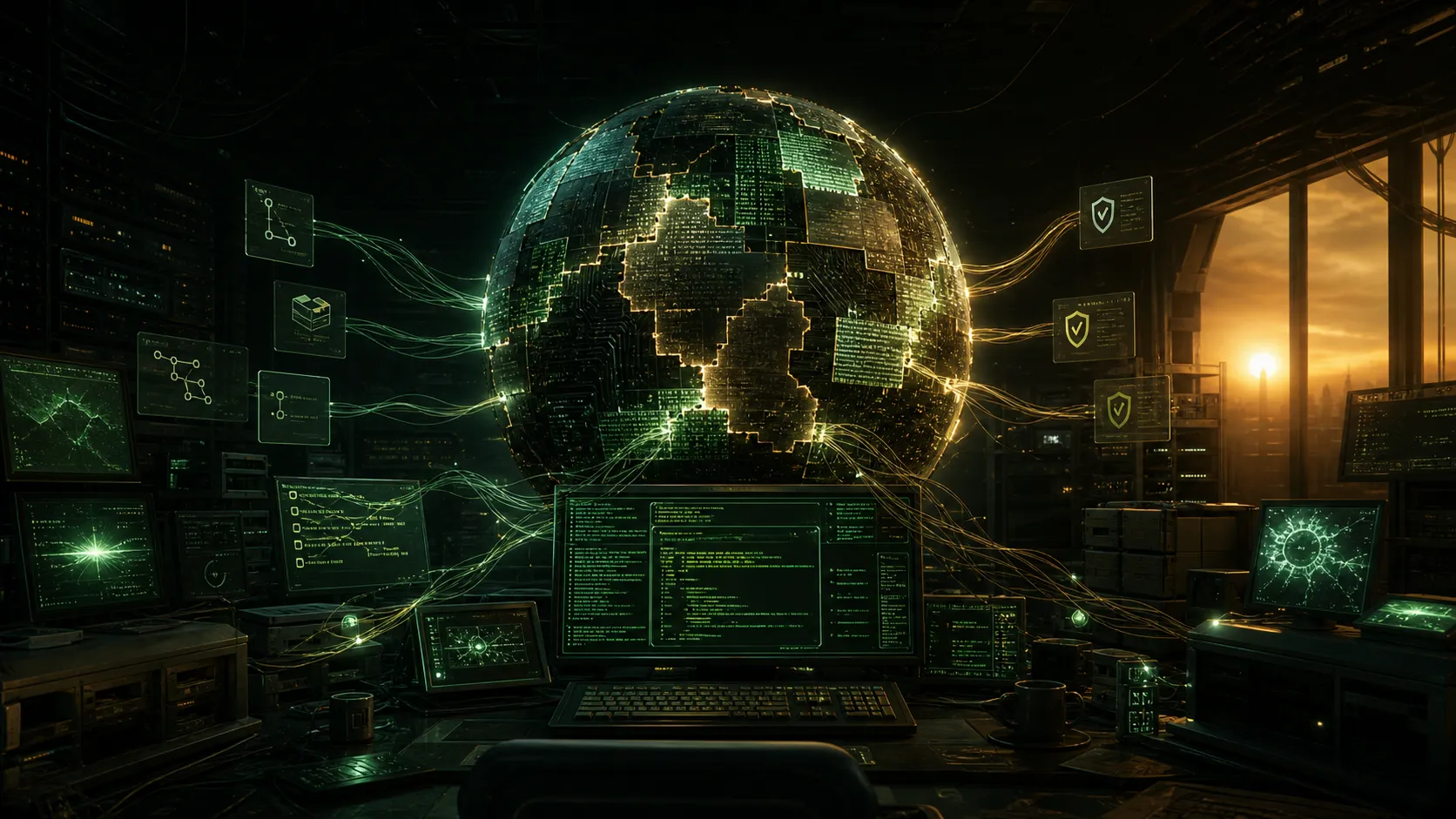
By 3:58 PM the hero image had finished: a glowing patchwork planet suspended over a terminal desk, cables feeding it green light while an amber sun leaked through a server-room window. Too pretty, probably. The actual story is uglier. Most infrastructure is not a planet made of elegant panels. It is unpaid labor, old decisions, package managers, mailing lists, CI scripts, edge cases, half-remembered tribal knowledge, and maintainers trying to protect users from bugs they did not have time to name yet.
Daybreak is a good name anyway.
The light is arriving. So is the work.
AI did not make software security easy. It made the queue faster. It made old scarcity move from discovery to judgment. It made patch capacity, maintainer trust, and access control the real battlefield.
That is the part a normal product announcement sands down.
OpenAI wants Daybreak to secure every organization in the world. Fine. Grand claims are what model labs do when left unsupervised near a noun.
The better question is smaller and harder: can the AI security stack reduce real risk without burying the people responsible for shared code?
Patch the Planet is the first honest answer I have seen from this wave because it admits the ugly thing.
The bug finder was never enough.
The patch factory is where the future gets audited.